
Frankenstein
Week 4

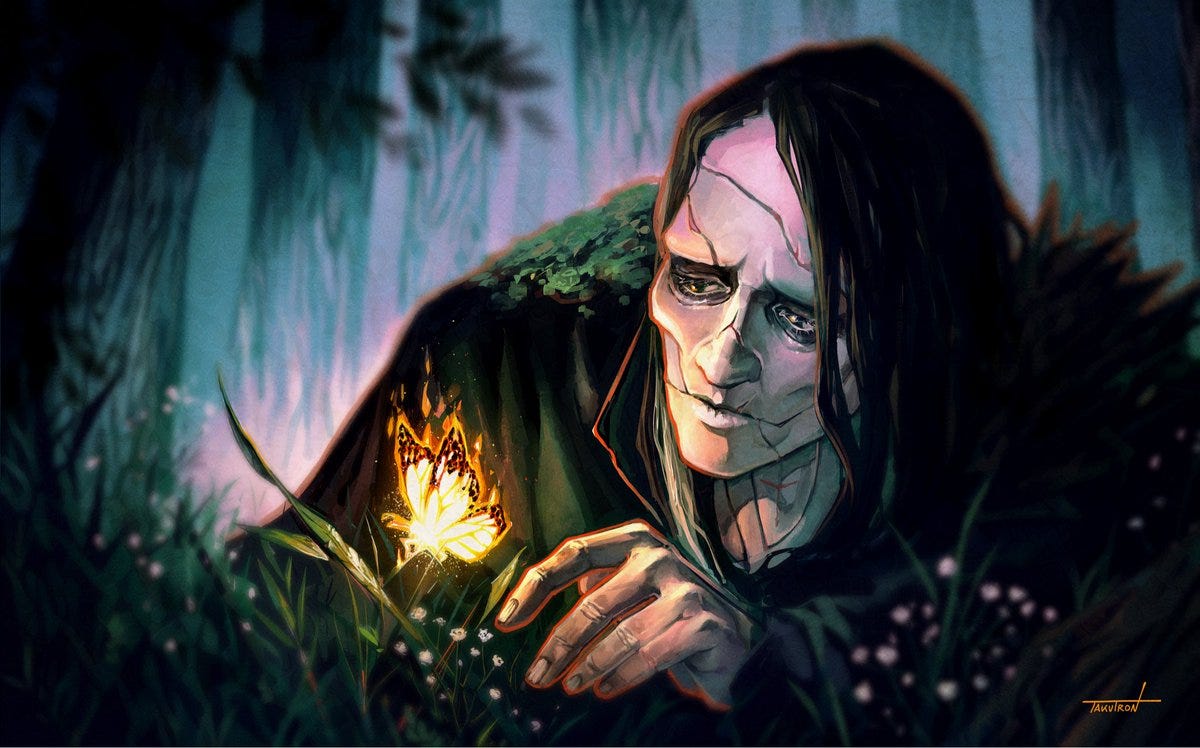
Through this section, we discover that the creature has learned language, history, and even what beauty is. And sadly, he has also learned that he is excluded from it.
We witness a sustained rejection of the creature’s form when all he wants to be is welcomed and given a chance for humanity to view his virtues.
I can’t help but wonder: Where might mercy have interrupted his descent?
Week Four Reading Checklist
Day 1
☐ Volume II, Chapter 3
Thoughts:
We see 2 sides of humanity — barbaric and violent, and gentle and beautiful. We also see that even though the Creature is learning physical survival skills, he still needs emotional and relational ones as well.
What happens when a being understands he is unwanted and unloved?
Optional Scripture:
Romans 5
Day 2
☐ Volume II, Chapter 4
Thoughts:
This chapter reveals the importance and formative power of language. Through words, the creature learns to name his world. This separation is another distinction between the Creature and the rest of humanity.
What virtues are displayed by the family in the cottage? What effect does this have on the Creature?
Optional Scripture:
Psalm 27:10
Day 3
☐ Volume II, Chapter 5
Thoughts:
The Creature refers to the observed family as ‘his friends’ and now ‘his protectors.’ He has also come to realize that knowledge once acquired cannot be forgotten, and that reminds him that apart from one’s creator and earthly family, identity is slippery.
How does your worldview allow you to reconcile the paradox of the human condition in this fallen world?
Optional Scripture:
1 Corinthians 8:6-7
Day 4
☐ Volume II, Chapter 6
Thoughts:
This part of the narrative describes how the family came to be at the cabin. Through it, we see that being a Christian (the Arabian woman) pays a high, worldly price for her beliefs. She leaves and gives up a materially comfortable yet spiritually oppressive life.
How does each betrayal affect those around them?
Optional Scripture:
1 John 2:15-17
Day 5
☐ Volume II, Chapter 7
Thoughts:
Vice and virtue have been cultivated in the creature through observation and story, but they are still untested in the world. As he continues to wrestle with identity, his internal hope grows even as he is dispondent about his outward reflection. The theme of loneliness in contrast to relationship starts to crescendo. In his vulnerability, the creature is once again rejected and exiled from community.
How does this rejection differ from the previous instances?
Optional Scripture:
Isaiah 53:3, Hebrews 4:15
The creature’s worst fear has come to pass. Even after the accumulation of knowledge, the practice and observation of virtue, and the courage he displayed to reach out for community and acceptance, he was still utterly and completely rejected. His desire for others to look past his hideous and grotesque appearance was met with disappointment again.
How many consequences could have been avoided if Frankenstein had just taken responsibility and care of his creation rather than rejecting and ignoring him?